
Digital transformation, built around your business.
IT Consulting, ERP and Software Company in Dubai
Consulting, business software, cloud and digital marketing for schools and businesses across the UAE.
 Sync School
 CampusTrack
 Scholÿn
 AiyaHR
 CloudSync One
 Cloud solutions



“I recently availed several IT services and purchased hardware from CloudSync Technologies LLC, and I couldn't be more satisfied with the experience.”
Platforms we implement and support







- Adobe Creative Cloud
- ERPNext





 Adobe Creative Cloud
 ERPNext
Who we are
A practical partner for schools and growing businesses
We are CloudSync Technologies, an IT consulting and software company in Dubai. We help schools and businesses improve how they work — with consulting, ERP and Zoho or Odoo implementation, our own platforms, cloud and Microsoft 365, and digital marketing.
Software we build, deploy and run
Our own platforms for schools, workforce management and business operations — designed and built in Dubai, and supported directly by the team that develops them.
One platform for your staff and student records.
The campus platform, in two halves that share one set of masters, one login and one mobile app — licensed separately, so a school can start with either.
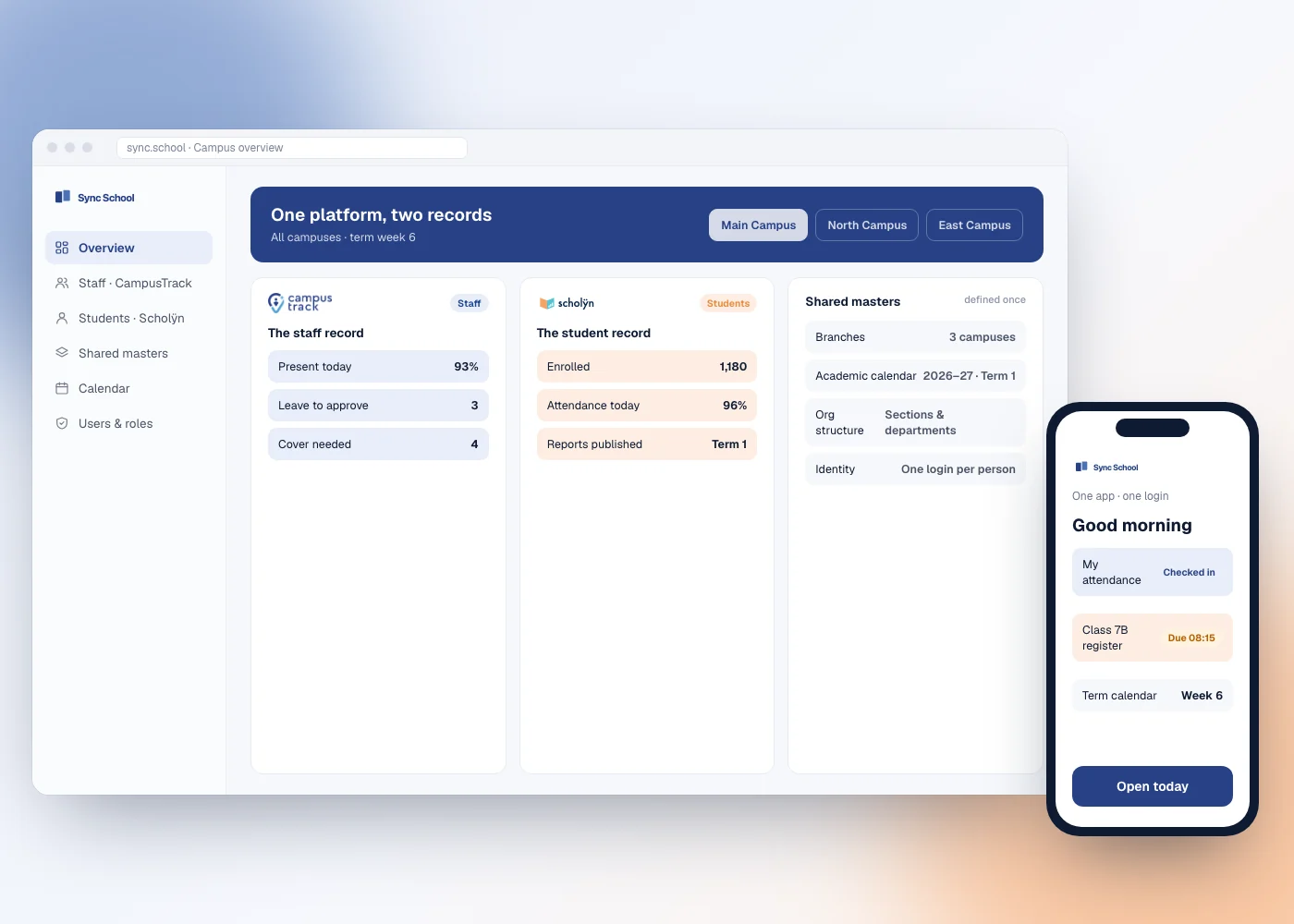
Products and services built to work together
Use our own platforms, or have us implement and connect the applications you choose — Zoho, Odoo, Microsoft 365. Either way, one team is accountable for getting it working.
- Sync SchoolCampus platform
- CampusTrackStaff record & operations
- ScholÿnStudent record
- AiyaHRAI HRMS & workforce
- CloudSync OneERP, CRM & accounting
- CloudSync ProjectProjects & timesheets
- CloudSync ServiceDeskCustomer helpdesk


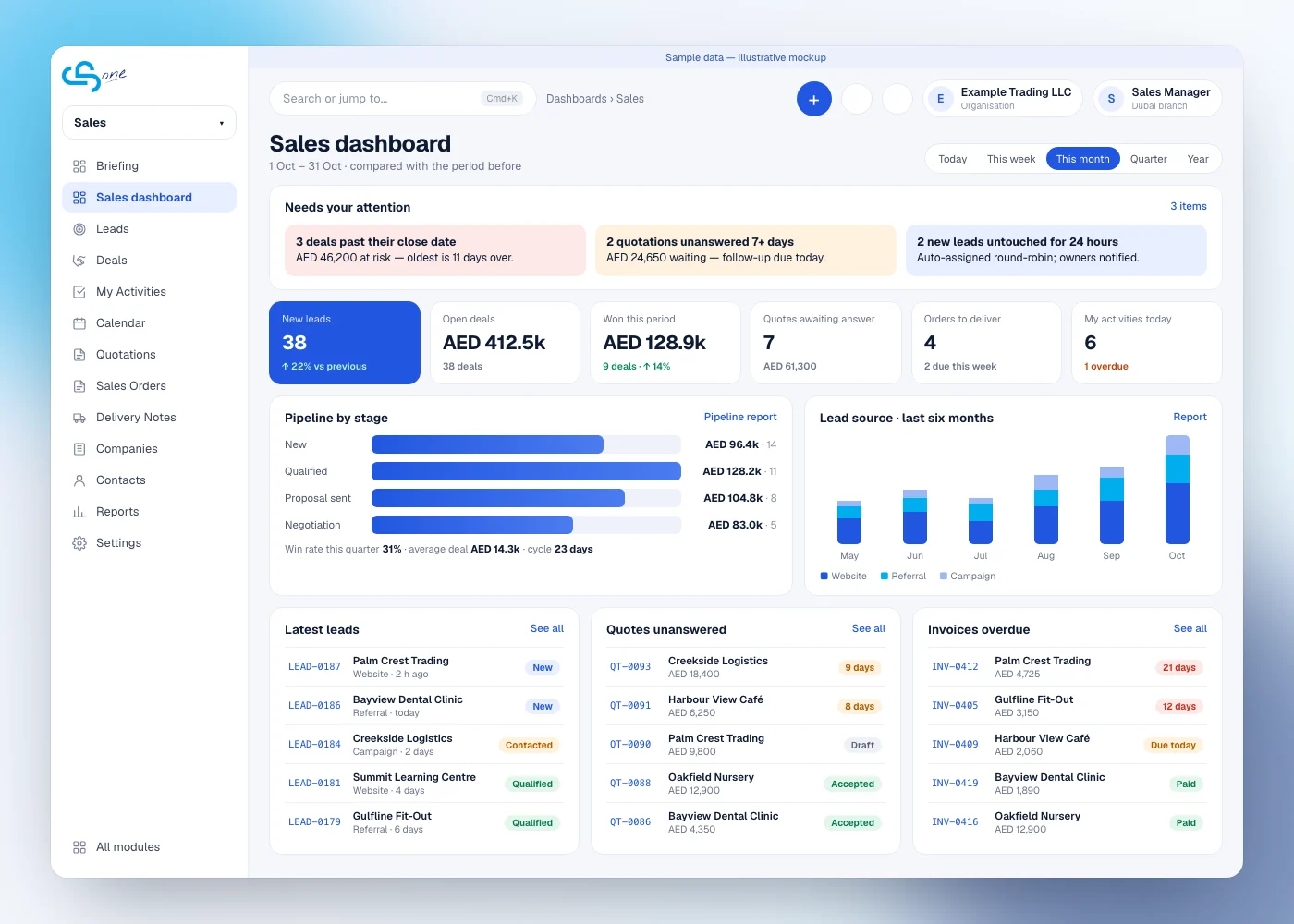 CloudSync One sales dashboard · sample dataAll products →
What we do
Explore our services →Standardised IT & Digital Solutions
CloudSync Technologies is an IT company in Dubai delivering consulting, business software, cloud and digital services for businesses, schools and organisations across the UAE.

IT Consulting & Digital Strategy
We map how your organisation works today and plan the systems that will help it work better…
Cloud Solutions & Infrastructure
Move to Microsoft 365, Azure or AWS with a plan for your data, security and costs…
ERP Software Solutions
Sales, stock, finance and HR in one system, set up around how your business runs.
Odoo ERP Solutions
Odoo implemented, configured and supported for your business — with your data migrated and your team trained.
Zoho Complete Solutions
Zoho CRM, Books, People and Projects, set up and connected around your business.
Software, Web & App Development
Build mobile-first websites, portals and business applications that load fast and are easy to manage…
SEO & SEM Services
Search and paid campaigns that bring the right visitors to your website, with reporting you can follow.
Social Media Marketing
Content, campaigns and community management on the platforms your customers use.Also:Cybersecurity SolutionsEducation Technology SolutionsArtificial Intelligence Solutions
Choose where to start
Pick an area to see what’s included.
Zoho and Odoo, set up around how you work
We map your sales, stock and finance workflows, configure Zoho or Odoo around them, migrate your data and train your team.
- ERP software
- Odoo ERP
- Zoho CRM & Projects
- Workflow automation

Every layer, one accountable partner
Strategy, business software, cloud and your online presence — delivered and supported by one team, with one plan.
- StrategyLAYER 04IT consultingDigital transformationRoadmapping
- Business softwareLAYER 03
- Cloud & securityLAYER 02AzureAWSFortinetMicrosoft 365
- Web & digital marketingLAYER 01WebsitesSEO & SEMSocial mediaDigital marketing
IT and software for schools, clinics and businesses
Proven expertise across the sectors that make up most of the UAE economy.








On site across the UAE
Head office in Dubai. Our team works on site when a visit is needed, and remote support covers everywhere else.
Remote support wherever you are in the UAE
- DubaiOn-site visits
- Sharjah & AjmanOn-site visits
- Abu DhabiOn-site · scheduled
- Northern EmiratesOn-site · scheduled
- Anywhere in the UAERemote support
From first call to handover in four steps
Every engagement starts the same way, so you always know what happens next.
- DiscoverWe learn how your team works today: the processes, systems and reports you rely on.
- DefineA written scope with costs, options and responsibilities. You approve it before work starts.
- Build & testWe configure the system and test it with your own data before anyone relies on it.
- Train & supportYour team is trained, administration is documented, and support is agreed in writing.
What Clients Say About Us
We are Proud to Work with These Companies









Why work with us
Why teams choose CloudSync
If you’re looking for an IT company in Dubai that delivers more than just technology, discover what makes CloudSync Technologies different.
- Our own software, supported by usThe team that builds our platforms is the team that supports them.
- We start with your processThe software follows how your team works, not the other way round.
- Clear scope, in writingWhat is included, who owns each decision, and how we will know it works.
- Tested with your dataReal records and transactions are checked before anyone relies on them.
- Training that sticksAdministrators and everyday users are trained, and support is agreed in writing.

Why Choose CloudSync Technologies – A Trusted IT Company in Dubai
- Consulting, business software, cloud and digital marketing from one team
- Our own school and workforce platforms, alongside Zoho and Odoo
- Experience with schools, clinics, F&B and growing companies in the UAE
- Clear scope, transparent pricing and plain communication
- Training and support agreed before go-live


Frequently asked questions
Let’s define your next digital priority
Tell us what you want to improve and the systems you use today. We’ll come back with a practical first step for your consulting, ERP, school systems, marketing or analytics project.
- Free
- 30 minutes
- No obligation
- A 30-minute expert session on your current IT setup
- Practical advice on your systems, data and online presence
- A clear first step for your organisation